A Flashlight in a Dark Desert — Practice
If consciousness is a flashlight, most of us use it erratically: the beam flickers, dims from fatigue, or fixates obsessively on shadowy areas (our worries). Good news: like a muscle, the direction of this light can be trained.
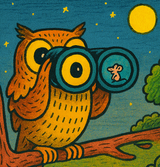

Following our introductory article, here is an in-depth, practice-oriented approach to learning how to master this valuable tool: attention.
1. Meditation: Stabilizing the beam
Meditation is nothing more than training in attentional stability. Without training, our flashlight is buffeted by the wind of our thoughts.
- The "Tripod" of Attention (Focus): Choose a fixed point (your breath, a candle). The exercise consists of keeping the light on this object. Each time the light drifts toward a distracting thought, gently bring it back. It is this "return" movement that strengthens your self-control.
- The Body Scan: Imagine you are slowly moving your lamp from your feet to the top of your head. This exercise teaches you to direct the light with precision based on physical sensations that are often ignored.
2. Art and Creativity: The "Reflectors" of the Invisible
Sometimes, our rational flashlight is unable to illuminate certain areas that are too deep or too painful. Art then acts like a hall of mirrors.
- Free Expression: Drawing, painting, or music allow us to project onto an external medium what is "in the dark" within us. By looking at your artwork, you are using a reflector: the light of your consciousness strikes the painting and returns to illuminate your inner self.
- Intuitive Writing: Write without thinking for 10 minutes. It's a way to let the flashlight explore the recesses of your unconscious without your inner "censor" directing the beam.
3. Dialogue and Dreams: Broadening the Scope of Vision
We all have blind spots: areas of our mind that our own lamp can never reach on its own.
- Otherness as a second lamp: In psychotherapy or during a deep discussion, it's as if another person brings their own flashlight. They illuminate your territory from a different angle, revealing contours (patterns of behavior) that you couldn't see before.
- The Dream Journal: Dreams are like nocturnal flashes in the most remote corners of our "vast space." Writing down one's dreams upon waking is an attempt to preserve a luminous record of what transpired in the shadows of night.
4. Managing Attentional "Battery"
For your lamp to be efficient, you need to learn how to save its energy.
- The "Complete Blackout" break: Several times a day, close your eyes and don't try to turn on any lights at all. Let the light go out for a moment. This rest allows your battery (your nervous energy) to recharge.
- The ethical choice: Before scrolling on your phone, ask yourself: "Do I really want to waste my battery in this area?" Taking back control of your lamp means choosing your battles.
Become the explorer of your own world
Learning to wield this lamp means moving from a life of passive acceptance (where the light is drawn to notifications and fears) to a life of active choice. By stabilizing your attention through meditation and using art as a mirror, you transform your mind from a dark expanse into a familiar territory rich with possibilities.
What corner of your mind deserves a spotlight today?